- ALL
- TRENDING
- PERFORMANCE
- CHARGING
- BATTERY
- DESIGN
- TECH
- NEWS
Why Your Daily Commute Is Easier with an Electric Bike Than a Scooter?
 Oben Electric
 Tue Dec 02 2025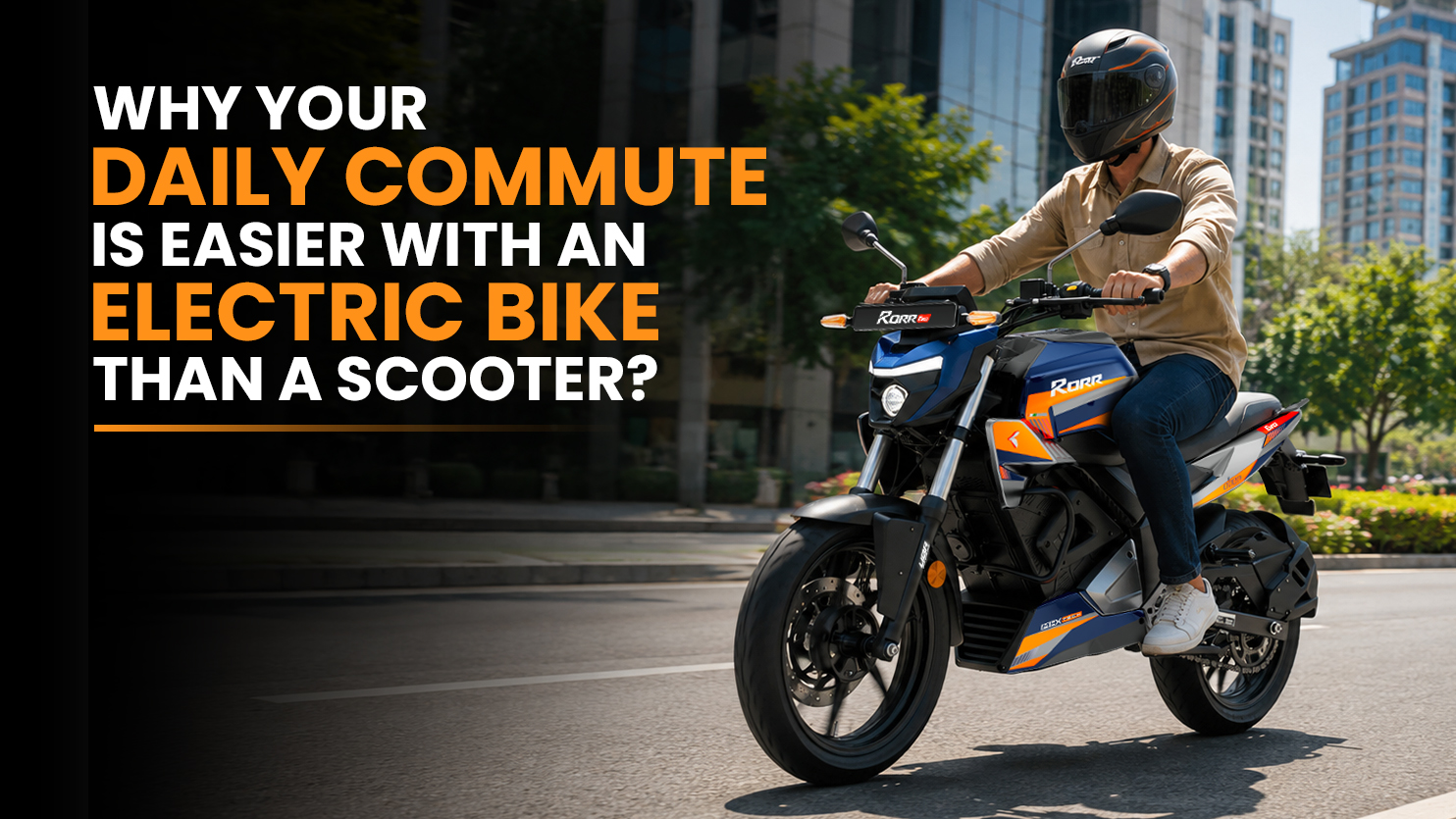
Table of Contents
- Why an Electric Bike Makes Daily Office Commutes Easier Than a Scooter
- Effortless City Acceleration with Instant Electric Torque
- Superior Stability and Riding Control in Urban Traffic
- More Comfortable for Daily 20–30 km Commutes
- Longer Real-World Range for Daily Riders
- Better Braking Confidence and Road Grip
- Lower Running Cost for Everyday Office Travel
- Smart Features That Make Daily Riding Easier
- Conclusion
Why an Electric Bike Makes Daily Office Commutes Easier Than a Scooter
Most people grab their scooter keys every morning out of pure habit, without questioning whether it is the best choice for the ride ahead. A quick trip to the market is one thing, but a 20 to 25 km office commute through flyovers, uneven roads, and heavy traffic is a very different experience. Over time, the long hours on the road and rising fuel costs make the electric bike vs scooter conversation far more relevant for everyday commuters.
Understanding what sets an electric bike apart from a scooter is the best place to start.
Effortless City Acceleration with Instant Electric Torque
Every office commute starts with traffic, and traffic demands a vehicle that responds quickly. Petrol engines need a moment to build RPMs before power reaches the wheel. That slight delay compounds across dozens of signals and overtakes through a single commute.
An electric bike delivers full torque the instant the throttle is twisted, starting from zero RPM. This makes pulling away from traffic signals and overtaking slower vehicles smoother and more controlled than it typically is on a scooter. Scooters with smaller motors are tuned for gentle, low-speed use and cannot match this kind of response.
For daily office riders who spend hours navigating stop-and-go traffic, this instant power delivery makes a top electric bike feel quicker, smoother, and easier to ride through the city. It is also one of the key reasons performance-electric bikes are becoming increasingly popular among urban commuters.
Superior Stability and Riding Control in Urban Traffic
City roads in India are unpredictable. Flyover approaches, unexpected potholes, and sudden lane changes are a daily reality. How a two-wheeler handles all of that comes down to its frame, wheel size, and weight distribution.
Scooters typically use 12- to 14-inch wheels, which are well-suited to low-speed urban riding. At higher speeds or on rougher surfaces, that design offers noticeably less stability. Electric bikes are built on a motorcycle-style frame tuned for a wider range of speeds and road conditions. A 130 mm wide rear tyre increases road contact significantly, while 17-inch wheels absorb potholes far more smoothly than smaller scooter wheels.
For office riders dealing with rough roads and unpredictable traffic daily, this electric bike stability reduces both the physical and mental effort of staying in control.
More Comfortable for Daily 20-30 km Commutes
Scooters are designed primarily for short trips. The seating is compact and upright, which works well for a 10-minute ride but causes noticeable strain during a 40-minute commute. The suspension on most scooters is also tuned for lighter and slower conditions.
Electric bikes, on the other hand, are built for longer ride durations. The seating posture distributes weight more evenly across the spine and hips. A multi-stage adjustable rear monoshock suspension absorbs road irregularities far more effectively, so the rider arrives at work in better shape than they would on a scooter.
For anyone looking for an affordable e-bike that handles 20 to 30 km commutes with less fatigue, this ergonomic difference is one of the most practical advantages. A relaxed riding posture improves rider comfort during longer commutes and contributes to a better overall riding experience.
Longer Real-World Range for Daily Riders
Range is the most common question for anyone considering an electric two-wheeler, and it is one of the clearest areas where electric bikes pull ahead of scooters.
Most electric scooters offer 90 to 120 km of IDC-certified range, measured under controlled lab conditions with flat roads, steady speeds, and ideal temperatures. Across the EV industry, real-world riding range is typically around 25% to 30% lower than the IDC-certified figure. This breakdown of IDC versus real-world electric bike range explains that gap in practical detail.
Electric bikes carry larger battery packs built with this gap in mind. A claimed range of 180 km may translate to a slightly lower real-world range depending on the riding style, traffic conditions, terrain and weather. For a daily round trip of 25 to 30 km, a single charge covers four to five days of riding, which is why many riders now look for the best range electric bike for everyday commuting.
Some bikes also come with LFP batteries (Lithium Iron Phosphate), which generally offer better thermal stability than many conventional lithium-ion battery chemistries, which matters during Indian summers. It also supports 2,000 to 4,000+ charge cycles, helping maintain consistent electric bike performance and battery health over years of daily commuting.
Better Braking Confidence and Road Grip
In city traffic, where every signal involves a stop and every lane change carries some unpredictability, the braking system is one of the most critical features of a daily commuter's bike.
Disc brakes paired with a Unified Brake Assist system distribute braking force between the front and rear wheels. This helps distribute braking force more evenly between the front and rear wheels, improving stability during braking and giving the stop a smooth feel. The 130 mm wide rear tyres hold the road more firmly, shortening stopping distances and keeping the bike stable when braking hard.
On wet roads after a monsoon shower or on loose gravel outside a construction zone, this combination gives riders a meaningful electric bike safety advantage over scooters with narrower tyres and simpler brake setups. If you prefer a convenient e-bike in the unpredictable conditions of Indian city roads, reliable braking is what makes that confidence possible every single day. With performance and safety accounted for, the next practical question is what it costs to run this kind of bike.
Lower Running Cost for Everyday Office Travel
An electric bike range of 140 km to 180 km can comfortably handle a 40 km daily office commute on a single charge. At petrol prices of around ₹100 per litre and average commuter-bike mileage of roughly 40 km per litre, a petrol bike costs around ₹2.50 per km to run, while an electric bike costs roughly ₹0.25 per km on electricity. For a 40 km daily commute, that works out to nearly ₹3,650 a year on charging versus around ₹36,500 on petrol.
Electric bikes also have significantly fewer moving parts than petrol bikes, which makes maintenance simpler and more affordable over time. Expenses such as engine oil changes, spark plug replacements, and carburettor servicing are also eliminated.
Smart Features That Make Daily Riding Easier
Modern electric bikes come with connectivity features that take the guesswork out of daily commuting. A dedicated smartphone app gives riders a real-time view of battery health and remaining range, so there are no surprises mid-ride. Navigation built into the app connects to a wide charging network, making longer trips easier to plan.
On the bike, a colour TFT digital dashboard displays speed, battery percentage, and estimated remaining range at a glance. Ride modes let the rider adjust performance based on road conditions and battery level. Eco mode conserves charge on familiar stretches, while higher performance modes open up when the road allows. SmartIQ technology ties this all together, giving riders intelligent insights into their riding patterns, battery usage, and overall bike health through a connected experience designed specifically for the daily commuter.
These electric bike features are not about adding complexity to the ride. They are about giving the rider the right information at the right time, making every commute feel more in control and less stressful.
Conclusion
Daily office commuting in India puts constant demands on a two-wheeler. Traffic-heavy roads, uneven surfaces, long hours in the saddle, rising fuel costs, and unpredictable riding conditions quickly expose the difference between a vehicle built for short convenience rides and one designed for everyday commuting.
That is where the electric bike vs scooter comparison starts to shift. For riders covering longer distances every day, an electric bike combines stronger performance in traffic, greater comfort, more dependable range, lower running costs, and smarter riding support in a way that fits modern city commuting far more naturally.
Oben Electric bikes combine a claimed IDC range of 180 km, an LFP battery built for Indian conditions, and connected features designed around everyday commuting needs. Explore Oben Electric bikes or book a test ride to experience the difference on your own commute.
FAQs
Yes. An electric bike costs roughly ₹0.25 per km to run, compared to around ₹2.50 per km for a petrol bike. For a 40 km daily commute, that means nearly ₹3,650 a year on charging versus around ₹36,500 on fuel, along with lower maintenance costs over time.
Electric bikes produce zero tailpipe emissions during the ride. In most studies, electric two-wheelers are associated with lower lifetime emissions than comparable petrol-powered vehicles, although results vary depending on the electricity mix used for charging. This advantage grows as India's electricity grid incorporates more renewable energy.
The seating posture, multi-stage suspension, and ergonomic design of electric bikes reduce rider fatigue on 20 to 30 km daily commutes. Riders switching from scooters consistently report arriving at work feeling noticeably fresher.
Instant torque makes low-speed city riding smooth and effortless. For commutes under 15 km, a single charge comfortably covers the entire working week.
Far fewer moving parts mean oil changes, spark plug replacements, and engine servicing are removed from the routine entirely. Upkeep is limited to tyres, brakes, and occasional software updates, making the maintenance schedule simpler and more affordable.