- ALL
- TRENDING
- PERFORMANCE
- CHARGING
- BATTERY
- DESIGN
- TECH
- NEWS
Electric vs Petrol Bike: Which Is Better?
 Oben Electric
 Thu Apr 10 2025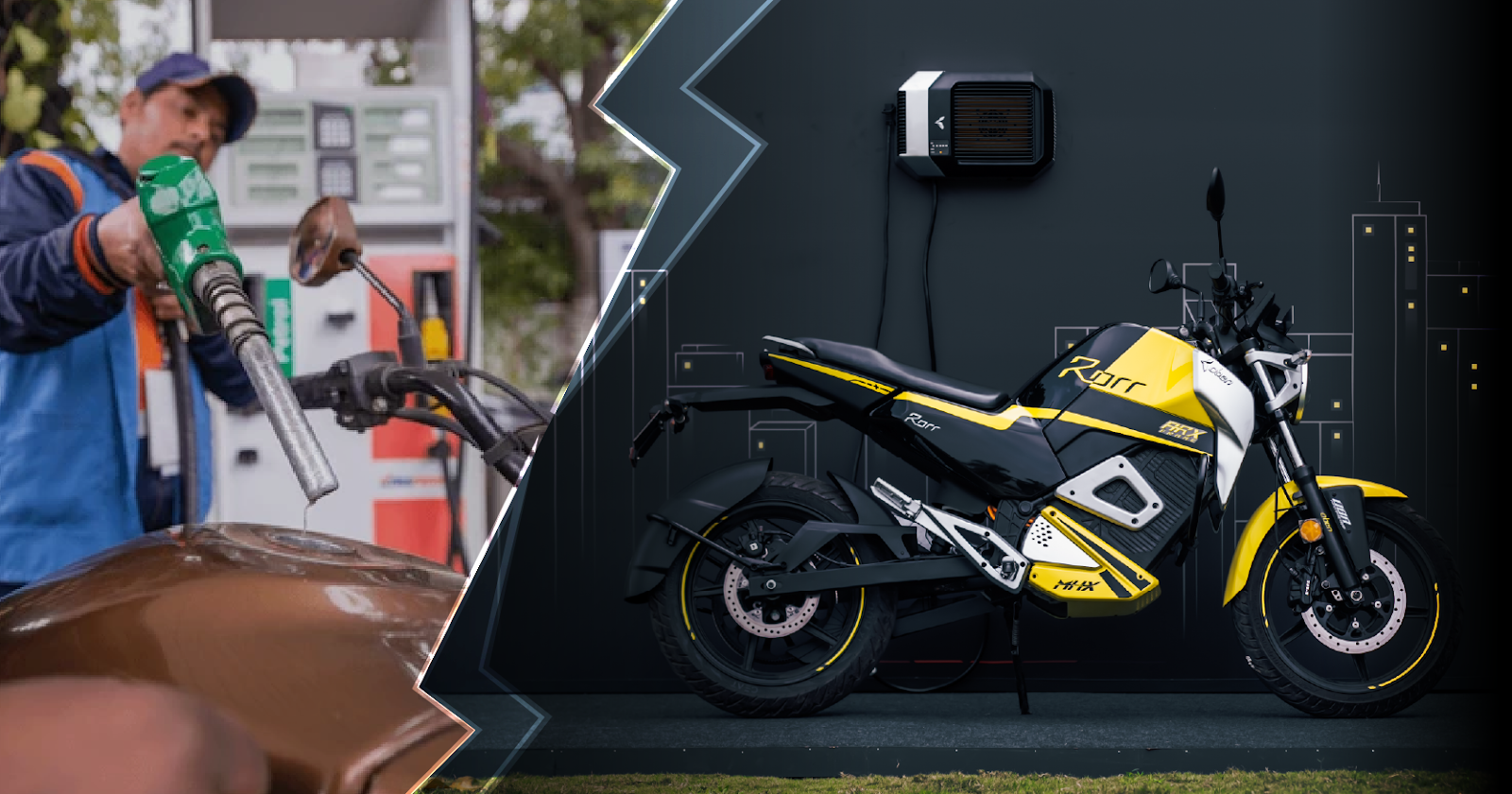
Table of Contents
- Initial Purchase Cost: Petrol vs Electric Bike
- Running Cost Comparison: Where Electric Bikes Win
- Maintenance Cost: Fewer Parts, Fewer Problems
- Performance & Riding Experience
- Range & Convenience: Charging vs Refuelling
- Environmental Impact
- Which One Should You Choose?
- Final Verdict
With rising fuel prices, increasing traffic, and growing awareness around sustainability, many Indian riders are rethinking their choice between petrol bikes and electric bikes. While petrol motorcycles have dominated Indian roads for decades, electric bikes are quickly emerging as a practical and cost-effective alternative—especially for daily commuting.
So, when it comes to electric vs petrol bike, which one actually makes more sense today? Let’s break it down across cost, performance, convenience, and real-world usage.
Initial Purchase Cost: Petrol vs Electric Bike
At first glance, petrol bikes usually appear cheaper than electric bikes. This is mainly because electric bikes include advanced battery technology, which adds to the upfront cost.
However, this price gap reduces significantly when you factor in government subsidies on electric bikes and ongoing offers. In many states, eligible electric bikes receive central and state incentives, making their effective on-road price much more competitive.
Petrol bikes may cost less initially, but that’s only half of the story.
Running Cost Comparison: Where Electric Bikes Win
Running cost is where electric bikes clearly outperform petrol bikes.
- An electric bike typically costs ₹0.25–₹0.30 per km to run.
- A petrol bike, depending on mileage and fuel prices, can cost ₹2–₹3 per km or more.
For a daily commuter riding 30–40 km a day, this difference adds up to thousands of rupees saved every year. Over 4–5 years of ownership, the savings become substantial.
This makes electric bikes far more economical for city riders and office commuters.
Maintenance Cost: Fewer Parts, Fewer Problems
Electric bikes have significantly fewer moving parts than petrol bikes. There’s no engine oil, clutch, gearbox, or exhaust system to worry about.
This results in:
- Lower servicing costs
- Fewer breakdowns
- Less time spent at service centre
Petrol bikes, on the other hand, require regular oil changes, engine servicing, and mechanical upkeep—adding to long-term ownership costs.
Performance & Riding Experience
Petrol bikes deliver power through RPM-based engines and gear shifts. Electric bikes deliver instant torque, which means quicker acceleration from a standstill—perfect for traffic-heavy Indian cities.
Electric bikes feel smoother, quieter, and easier to ride in stop-and-go traffic. The absence of engine heat and vibration also reduces rider fatigue during daily commutes.
Range & Convenience: Charging vs Refuelling
Petrol bikes are quick to refuel, but electric bikes have become far more convenient than many people expect.
Most modern electric bikes comfortably cover daily commuting distances on a single charge. Home charging eliminates frequent fuel station visits, and public charging networks are steadily expanding.
For city riders with predictable daily usage, charging is rarely an inconvenience.
Environmental Impact
Petrol bikes emit harmful gases and contribute directly to air pollution. Electric bikes produce zero tailpipe emissions, helping reduce noise and air pollution in cities.
Choosing an electric bike is not just a cost decision—it’s also an environmentally responsible one.
Which One Should You Choose?
- Choose an electric bike if you commute daily, want low running costs, prefer smooth city riding, and plan long-term ownership.
- Choose a petrol bike if you frequently ride long highway distances with no charging access or prefer traditional engine characteristics.
Final Verdict
When comparing electric vs petrol bikes, electric bikes clearly offer lower running costs, simpler maintenance, and a more comfortable city riding experience. For most Indian commuters, electric bikes are no longer a future option—they’re a smarter present-day choice.
As charging infrastructure and battery technology continue to improve, electric bikes are set to become the default choice for urban mobility in India.
Blogs to Read Next:
- EMPS 2024 Explained: What It Is, Why It Was Introduced, and What EV Buyers Should Know
- Electric Bike Range for Daily Office Riders — Real-World Expectations vs Reality
- Why Your Daily Commute Is Easier with an Electric Bike Than a Scooter?
- Electric Bike Battery Types Explained: Which One Powers Oben Electric Bikes?
Are electric bikes cheaper than petrol bikes in the long run?
For a daily commuter, the savings can be significant. An electric bike typically costs around ₹0.25–₹0.30 per km to run, while a petrol bike can cost ₹2–₹3 per km depending on fuel prices and mileage. This can translate to savings of ₹20,000–₹40,000 per year for riders who commute regularly.
Yes. Electric bikes perform especially well in city traffic because they offer instant torque, smooth acceleration, and no gear shifting. This makes riding easier in stop-and-go conditions and reduces rider fatigue compared to petrol bikes.
Charging is quite convenient for most city riders. Electric bikes can be charged at home using a standard power connection, and public charging networks are steadily expanding across major cities. For daily commuting distances, overnight home charging is usually sufficient, making charging hassle-free for urban use.